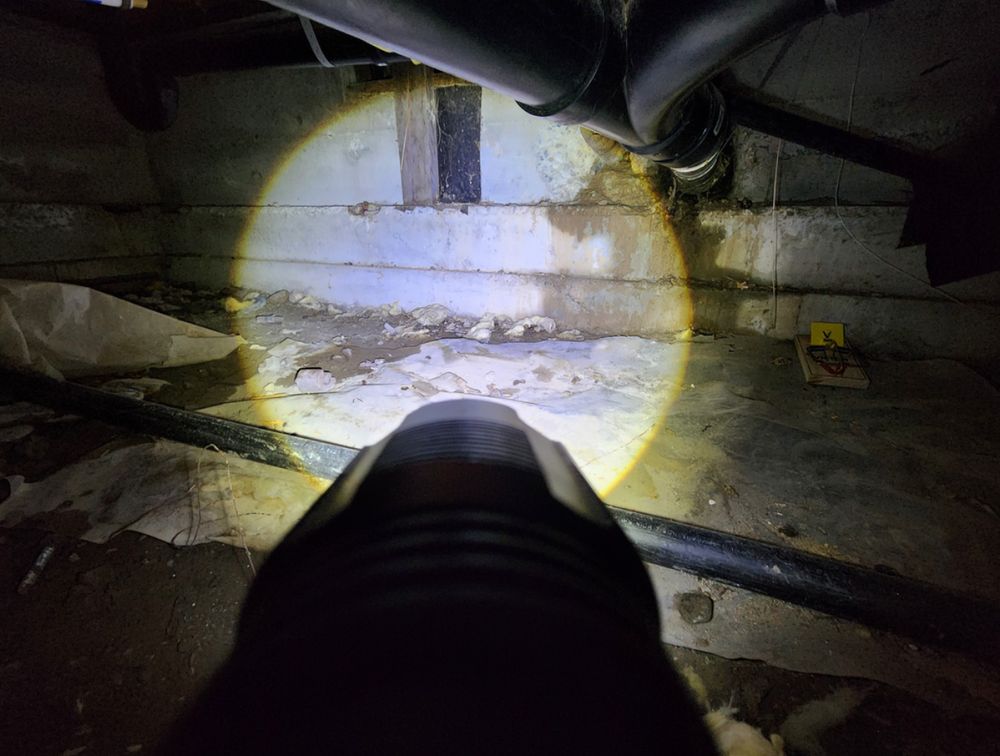
Signs of Rats
- Droppings along walls, in the attic or garage
- Gnaw marks on wood, wiring or pipes
- Greasy rub marks along baseboards and pipes
- Scratching in walls or ceilings at night
- Burrows or disturbed soil near the foundation
How Rats Get In
A rat needs an opening roughly the size of a quarter. In Pacific Northwest homes the most common entry point I find is earth-to-wood contact, where soil or mulch touches siding, trim or framing. Moisture softens the wood and makes it easy to chew through.
I also check utility penetrations, crawl space vents, garage door weatherstripping, roofline gaps and exhaust vents.
What I Do
- 1Inspect. Interior, attic, crawl space and exterior.
- 2Plan. A plan built around what I find at your property.
- 3Remove. Targeted trapping and baiting with children and pets in mind.
- 4Exclude. Identify and seal the entry points.
- 5Follow up. Most one-time services include a 60-day warranty unless ongoing activity or structural conditions require continued service.
Frequently Asked Questions
How much does rat control cost?
Inspections are $195 for residential and commercial properties. I explain the plan and cost after inspecting.
Are rats dangerous?
Rats can damage wiring and insulation and their droppings carry health risks, so it's worth acting early.